The Creators Growing Fastest in 2026 Aren't Creating More Content—They're Building Better Workflows
A few years ago, content creation was mostly a manual process.
You researched topics yourself.
You wrote every article from scratch.
You edited videos frame by frame.
You created social media posts individually for every platform.
And if you were running a blog, YouTube channel, newsletter, or affiliate website alone, you probably felt overwhelmed most of the time.
Fast forward to 2026 and the landscape looks very different.
Today's most successful creators are not necessarily working harder.
They're building smarter systems.
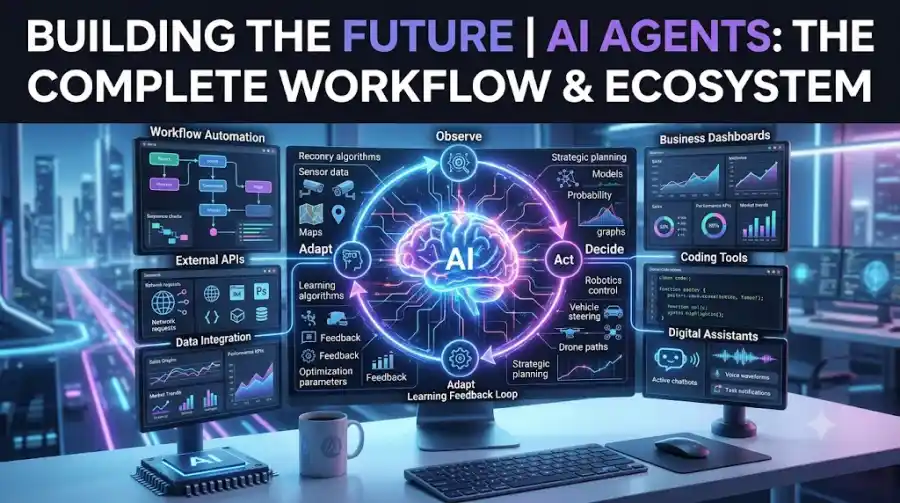
One of the biggest reasons is the rise of AI agents.
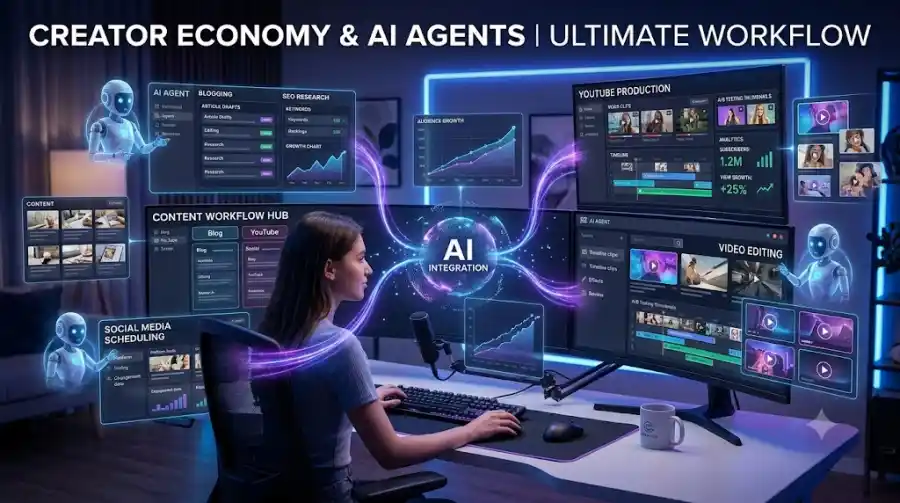
Unlike traditional AI tools that respond to individual prompts, AI agents can perform multi-step tasks, connect tools together, automate workflows, and help creators manage entire content pipelines. Industry analysts increasingly describe content agents as systems that can move from research to drafting, optimization, and even publishing workflows with minimal supervision.
But with hundreds of AI tools claiming to be "agentic," which ones are actually worth using?
Let's explore the best AI agents for content creators in 2026.
What Makes an AI Agent Useful for Content Creators?
Before jumping into the tools, it's important to understand what separates an AI agent from a typical AI assistant.
A standard AI tool usually performs one task.
Examples:
- Write a paragraph
- Generate an image
- Create a headline
- Summarize text
An AI agent goes further.
It can:
- Research a topic
- Analyze competitors
- Create an outline
- Write a draft
- Optimize SEO
- Generate social posts
- Schedule content
- Track performance
The difference is workflow automation rather than isolated output generation. Several 2026 reviews note that the strongest content agents reduce the number of manual steps creators must perform themselves.
Why Content Creators Are Adopting AI Agents
Creating content today involves much more than writing.
A single blog post might require:
- Keyword research
- Competitor analysis
- Outline creation
- Writing
- Editing
- Image generation
- SEO optimization
- Publishing
- Social promotion
The same challenge exists for YouTube creators, podcasters, and newsletter publishers.
Recent creator-focused research suggests that much of a creator's time is spent on research, editing, and distribution rather than actual creative work. AI agents are increasingly being used to automate those repetitive steps.
1. ChatGPT
Best For:
All-around content creation
For many creators, ChatGPT remains the most versatile AI platform available.
It can assist with:
- Topic research
- Article outlines
- Content planning
- Script writing
- Content repurposing
- SEO brainstorming
What makes it particularly useful is flexibility.
A blogger can use it for long-form articles.
A YouTuber can use it for scripts.
A marketer can use it for campaigns.
Many creator-focused comparisons still consider ChatGPT one of the strongest starting points because it supports multiple stages of the content workflow within a single environment.
Best For
- Bloggers
- Freelancers
- Affiliate marketers
- Newsletter creators
2. Jasper
Best For:
Brand-consistent content
Jasper has evolved from a writing assistant into a more workflow-oriented content platform.
One of its biggest strengths is maintaining a consistent brand voice across multiple pieces of content.
This is especially valuable for:
- Agencies
- Marketing teams
- Multi-author websites
Industry evaluations frequently highlight Jasper's brand-voice capabilities and campaign automation features.
3. Copy.ai
Best For:
Marketing content automation
Copy.ai focuses heavily on content workflows and marketing automation.
Creators use it for:
- Email campaigns
- Product descriptions
- Marketing funnels
- Content distribution
Several agent-focused reviews rank Copy.ai among the stronger options for automating repetitive content-marketing tasks.
4. Perplexity
Best For:
Research and source discovery
Research is one of the most time-consuming parts of content creation.
Perplexity helps creators:
- Discover sources
- Explore trends
- Verify information
- Gather supporting references
Many bloggers now use Perplexity as the first step before writing articles. Research-focused AI workflows frequently include Perplexity because of its emphasis on source-backed information.
5. Writesonic
Best For:
SEO-focused publishing
Writesonic has expanded beyond content generation into broader content workflows.
Popular uses include:
- Blog creation
- SEO optimization
- Landing pages
- Website content
Several reviews identify Writesonic as a strong option for solo creators seeking an affordable workflow-focused tool.
6. Canva AI
Best For:
Visual content creation
Content creation isn't only about words.
Creators also need:
- Thumbnails
- Social graphics
- Infographics
- Presentations
Canva AI helps creators generate visual assets quickly while maintaining brand consistency. Creator-focused comparisons frequently include Canva AI among essential tools for modern content workflows.
7. Descript
Best For:
Podcast and video editing
Video creators often spend hours editing content.
Descript simplifies tasks such as:
- Transcription
- Video editing
- Podcast production
- Caption creation
Many creator workflow studies continue to place Descript among the most useful tools for audio and video production.
8. Opus Clip
Best For:
Content repurposing
One long video can become:
- YouTube Shorts
- TikTok videos
- Instagram Reels
- LinkedIn clips
Opus Clip specializes in finding and extracting short-form moments from longer videos.
This helps creators maximize content output without recording additional material. Video-first creator stacks frequently include specialized repurposing tools like Opus Clip.
9. Notion AI
Best For:
Content planning
Content success depends on organization.
Notion AI helps creators manage:
- Editorial calendars
- Research databases
- Publishing schedules
- Team collaboration
Many creators treat Notion AI as the operating system for their content business rather than simply another writing tool.
10. Zapier AI Agents
Best For:
Workflow automation
Zapier AI Agents connect different tools together.
Examples:
- Publish article → Share on social media
- Receive lead → Add to CRM
- Upload video → Trigger promotion workflow
Several workflow-focused reviews highlight automation platforms as essential for creators trying to scale output without increasing workload.
How Content Creators Should Actually Use AI Agents
One common mistake is expecting AI to replace creativity.
The most successful creators use AI differently.
They use AI agents for:
Research
Gathering information faster.
Organization
Managing workflows.
Repurposing
Turning one piece of content into multiple formats.
Optimization
Improving SEO and discoverability.
Automation
Reducing repetitive work.
The creative vision still comes from humans.
AI simply removes many of the repetitive tasks surrounding content production.
A Practical AI Workflow for Bloggers
Let's say you're publishing an article.
A modern workflow might look like this:
Step 1
Use Perplexity for research.
Step 2
Use ChatGPT for outlining.
Step 3
Draft content using ChatGPT or Jasper.
Step 4
Optimize using Writesonic.
Step 5
Create graphics in Canva AI.
Step 6
Distribute using Zapier AI Agents.
This process can reduce hours of manual work while keeping the creator in control.
Common Mistakes Creators Make With AI
Publishing Without Editing
AI-generated content should always be reviewed.
Ignoring Original Experience
Readers value firsthand insights.
Using Too Many Tools
Many creators subscribe to tools they barely use.
Chasing Quantity
Publishing more content doesn't automatically create growth.
Quality remains the most important factor.
Several creator-focused analyses emphasize that AI works best when paired with human editorial judgment rather than replacing it.
Will AI Agents Replace Content Creators?
Probably not.
What they will replace are repetitive tasks.
The creator's role is evolving from:
"Do everything manually"
to
"Manage a content system."
The creators who adapt fastest are often the ones who focus on strategy, storytelling, audience understanding, and unique insights while allowing AI agents to handle repetitive work.
Frequently Asked Questions
- What is the best AI agent for bloggers?
ChatGPT, Jasper, Perplexity, and Writesonic are among the most commonly recommended options for bloggers because they support research, planning, writing, and optimization workflows
- Can AI agents help with SEO?
Yes. Many content-focused AI agents assist with keyword research, optimization, content planning, and workflow automation.
- Should creators rely entirely on AI?
No. Human creativity, expertise, fact-checking, and editorial judgment remain essential for producing valuable content.
The best content creators in 2026 are not using AI to replace creativity.
They're using AI to eliminate friction.
Whether you're running a blog, YouTube channel, newsletter, affiliate website, or personal brand, the right AI agents can save hours every week by automating research, planning, editing, optimization, and distribution.
The goal isn't to create more content simply because AI makes it possible.
The goal is to create better content, reach more people, and spend more time on the parts of the process that truly require human creativity.