The Highest-Performing Sales Teams in 2026 Aren’t Replacing Salespeople—They’re Giving Them AI Teammates
A few years ago, the idea of an AI-powered sales team sounded like science fiction.
Sales was considered a deeply human profession.
Building trust.
Understanding customer needs.
Negotiating deals.
Creating relationships.
These activities seemed impossible to automate.
Yet something interesting happened.
Artificial intelligence became dramatically better at handling the repetitive work that surrounds the sales process.
Instead of replacing salespeople, AI started helping them.
Researching prospects.
Updating CRM records.
Writing follow-up emails.
Prioritizing opportunities.
Analyzing pipelines.
Scheduling meetings.
In 2026, this evolution has accelerated with the rise of AI agents.
Unlike traditional automation tools, AI agents can work across multiple systems, perform multi-step tasks, and help sales teams achieve specific goals.
The result?
Sales professionals spend less time on administrative work and more time doing what they do best—building relationships and closing deals.
For businesses looking to increase revenue without dramatically increasing headcount, AI agents are quickly becoming one of the most valuable tools in the sales technology stack.
What Are AI Agents for Sales Teams?
AI agents are intelligent software systems designed to complete tasks and achieve objectives with limited human intervention.
For sales teams, AI agents can:
- Research prospects
- Qualify leads
- Prioritize opportunities
- Draft personalized outreach
- Schedule meetings
- Update CRM systems
- Generate reports
- Monitor sales pipelines
Unlike a chatbot that simply answers questions, an AI agent works toward a goal.
For example:
A sales representative may ask:
"Find 50 high-quality prospects in the healthcare industry."
A modern AI agent can:
- Research companies
- Identify decision-makers
- Collect relevant information
- Prioritize prospects
- Generate outreach drafts
All within a single workflow.
This ability to coordinate multiple tasks is what makes AI agents different from traditional automation tools.
Why Sales Teams Are Adopting AI Agents
Sales professionals face increasing pressure.
Revenue targets continue to rise.
Competition continues to grow.
Customers expect faster responses.
Meanwhile, sales teams still spend significant amounts of time on non-selling activities.
Common challenges include:
- Prospect research
- Data entry
- CRM updates
- Meeting scheduling
- Lead qualification
- Pipeline management
Many sales representatives spend more time preparing to sell than actually selling.
AI agents help reduce this burden.
By automating repetitive activities, they allow teams to focus on conversations, strategy, and relationship building.
The Problem With Traditional Sales Workflows
Consider a typical sales process.
A representative might:
- Research a company
- Find decision-makers
- Gather contact information
- Write outreach messages
- Schedule meetings
- Update the CRM
- Track responses
- Create reports
Each step consumes time.
Individually, these tasks may seem small.
Collectively, they can occupy hours every week.
As businesses grow, these inefficiencies become increasingly expensive.
AI agents help streamline these workflows.
How AI Agents Improve Sales Productivity
One of the biggest advantages of AI agents is productivity.
Instead of manually managing every task, sales teams can automate significant portions of their workflow.
Let's examine how.
1. Prospect Research
Finding qualified prospects is often one of the most time-consuming sales activities.
Representatives must identify:
- Target companies
- Relevant industries
- Decision-makers
- Contact information
- Buying signals
AI agents can help automate much of this process.
They can gather information from multiple sources and organize it into actionable insights.
This reduces research time and improves prospect quality.
2. Lead Qualification
Not every lead deserves the same level of attention.
Some are ready to buy.
Others are simply exploring options.
AI agents can evaluate:
- Industry fit
- Company size
- Engagement history
- Website activity
- Product interest
This helps sales teams focus on the most promising opportunities.
Rather than treating every lead equally, teams can prioritize their efforts more effectively.
3. Intelligent Lead Scoring
Lead scoring helps determine which prospects are most likely to convert.
Traditional systems rely on fixed rules.
AI agents can analyze far more variables.
Including:
- Customer behavior
- Historical conversions
- Engagement patterns
- Similar customer profiles
This creates more accurate lead rankings.
As a result, sales teams spend less time pursuing low-quality opportunities.
4. Personalized Outreach
Customers are increasingly resistant to generic sales messages.
Most decision-makers can immediately recognize copy-and-paste outreach.
AI agents help create personalized communication by analyzing:
- Company information
- Industry trends
- Previous interactions
- Customer challenges
This allows outreach to feel more relevant and authentic.
Better personalization often leads to higher response rates.
5. Meeting Scheduling
Scheduling may seem simple.
In reality, it often involves:
- Email exchanges
- Calendar coordination
- Availability checks
- Time zone management
AI agents can automate much of this process.
They help eliminate unnecessary back-and-forth communication and make scheduling more efficient.
6. CRM Updates
Ask most salespeople which task they enjoy least.
Many will say:
"Updating the CRM."
Yet accurate CRM data is essential.
AI agents can assist by:
- Logging interactions
- Updating records
- Creating summaries
- Tracking engagement
This improves data quality while reducing administrative workload.
7. Pipeline Management
Managing a sales pipeline becomes increasingly difficult as businesses scale.
AI agents can help:
- Identify stalled opportunities
- Highlight risks
- Recommend actions
- Monitor deal progression
This improves visibility and helps managers make better decisions.
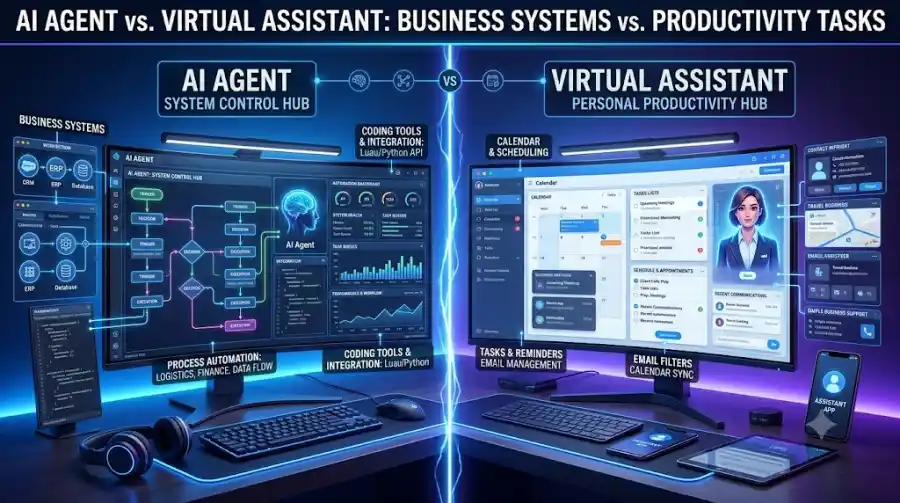
AI Agents vs Traditional Sales Automation
Many people assume AI agents are simply advanced automation software.
There are important differences.
Traditional automation follows predefined rules.
For example:
If a lead fills out a form, send an email.
If a prospect books a meeting, update the CRM.
AI agents go beyond fixed workflows.
They can:
- Analyze context
- Evaluate information
- Prioritize actions
- Adapt workflows
This flexibility makes them more useful for complex sales environments.
AI Agents for Different Types of Sales Teams
B2B Sales Teams
Business-to-business sales often involve long buying cycles.
AI agents help by:
- Tracking interactions
- Monitoring engagement
- Managing opportunities
- Supporting account research
SaaS Sales Teams
Software companies frequently use AI agents to:
- Qualify inbound leads
- Schedule product demos
- Personalize outreach
- Improve pipeline visibility
Ecommerce Sales Teams
AI agents can support:
- Customer segmentation
- Product recommendations
- Upselling opportunities
- Customer retention
Agency Sales Teams
Marketing and consulting agencies often use AI agents for:
- Prospect discovery
- Research
- Proposal preparation
- Follow-up management
Benefits of AI Agents for Sales Teams
Increased Productivity
Representatives spend less time on administrative work.
Faster Response Times
Prospects receive quicker engagement.
Better Lead Quality
AI helps identify stronger opportunities.
Improved Pipeline Visibility
Managers gain better insight into sales performance.
Greater Scalability
Businesses can grow without proportionally increasing staff.
More Selling Time
Sales professionals spend more time talking to customers.
Common Mistakes Businesses Make
AI agents are powerful.
However, implementation mistakes are common.
Automating Everything
Not every process should be automated.
Ignoring Data Quality
AI depends on accurate information.
Eliminating Human Oversight
Human judgment remains essential.
Focusing Only on Technology
Successful sales still depend on relationships.
The best results come from combining human expertise with intelligent automation.
Best Practices for Using AI Agents in Sales
Start With Repetitive Tasks
Automate activities that consume significant time.
Define Clear Goals
Measure results using specific metrics.
Maintain Human Involvement
Keep people involved in important decisions.
Monitor Performance
Track:
- Conversion rates
- Pipeline growth
- Response rates
- Revenue outcomes
Continuously Improve
AI workflows should evolve over time.
The Future of AI-Powered Sales
The sales profession is changing.
Future AI agents will likely become even better at:
- Opportunity identification
- Customer insights
- Pipeline forecasting
- Revenue analysis
- Sales coaching
- Workflow orchestration
However, technology will not eliminate the need for sales professionals.
Trust remains important.
Relationships remain important.
Human communication remains important.
AI will help salespeople become more effective.
It will not replace the value they bring.
Frequently Asked Questions
- What are AI agents for sales teams?
AI agents are software systems that help automate prospecting, lead qualification, CRM updates, scheduling, pipeline management, and sales workflows.
- Can AI agents replace salespeople?
No. AI agents are designed to support sales professionals by reducing repetitive work and improving productivity.
- How do AI agents improve lead generation?
They help identify prospects, analyze buying signals, prioritize opportunities, and personalize outreach.
- Are AI agents useful for small businesses?
Yes. Small businesses can use AI agents to automate routine sales activities and improve efficiency.
- What is the biggest benefit of AI agents in sales?
The biggest benefit is allowing sales teams to spend more time building relationships and closing deals rather than handling administrative tasks.
Sales has always been about people.
Understanding needs.
Building trust.
Creating value.
Closing deals.
AI agents do not change those fundamentals.
What they change is everything around them.
Research becomes faster.
Follow-ups become easier.
CRM systems become smarter.
Pipelines become more visible.
Administrative work decreases.
As a result, sales professionals can focus on the activities that truly drive revenue.
The most successful sales teams in 2026 are not replacing people with AI.
They're combining human expertise with intelligent automation.
And for many businesses, that combination is becoming a significant competitive advantage.