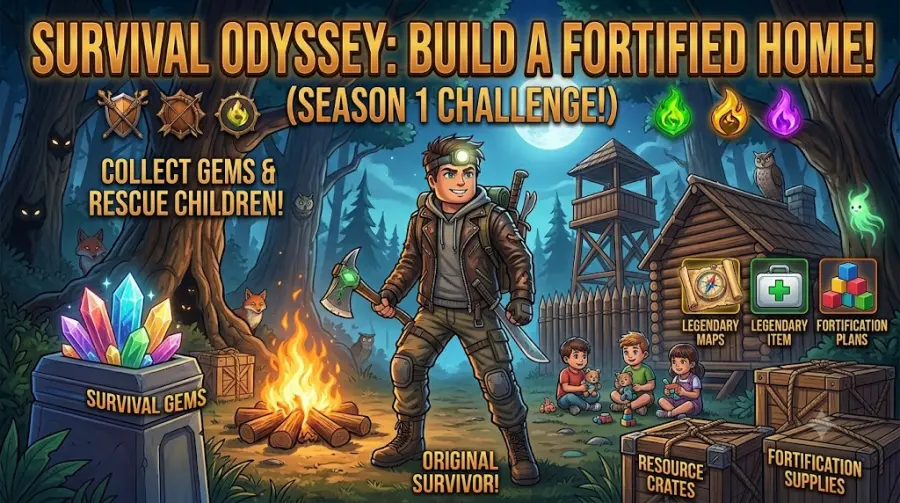
Most Players Fear the Monsters. Experienced Survivors Fear Running Out of Resources.
The first few nights in 99 Nights in the Forest feel manageable.
Resources seem plentiful.
The forest appears small.
Enemies don't feel overwhelming.
Then everything changes.
Food becomes scarce.
Dangerous creatures appear more frequently.
Exploration becomes risky.
And every decision begins to matter.
Many players assume success comes from fighting stronger enemies.
In reality, survival is usually determined by preparation.
The players who survive the longest often aren't the best fighters.
They're the best planners.
Why 99 Nights in the Forest Is Different From Other Roblox Survival Games
Many survival games focus primarily on combat.
99 Nights in the Forest creates pressure through scarcity.
Players must constantly balance:
- Exploration
- Resource collection
- Base improvement
- Rescue missions
- Survival
Every choice has consequences.
Leaving camp too often creates risk.
Staying too long limits progression.
Finding the right balance is the key to success.
Understanding the Core Survival Loop
The game revolves around a simple but challenging cycle:
Explore During the Day
Search for resources.
Locate objectives.
Gather supplies.
Prepare Before Nightfall
Return safely.
Organize resources.
Strengthen defenses.
Survive the Night
Protect yourself.
Conserve resources.
Avoid unnecessary risks.
Repeat Efficiently
Every successful day improves future survival chances.
Players who understand this loop progress faster.
Why Base Location Matters More Than Most Players Think
Many beginners build wherever they happen to stop.
This creates problems later.
A strong base location should provide:
Fast Resource Access
Nearby trees and materials.
Clear Visibility
Early warning against threats.
Efficient Travel Routes
Quick access to multiple regions.
Expansion Potential
Space for future growth.
A poor base location creates daily inefficiencies that become increasingly noticeable after dozens of nights.
Best Resource Priorities Early On
Not all resources provide equal value.
New players often waste time collecting everything.
A better approach is prioritization.
Focus first on:
- Building materials
- Food sources
- Defensive resources
- Essential crafting components
This creates stability faster.
Why Child Rescue Missions Matter
Rescue missions are among the most important progression systems.
Many players treat them as optional.
That is a mistake.
Rescue objectives often provide:
- Valuable rewards
- Progression opportunities
- Additional benefits
- Long-term advancement
Successful survivors learn efficient rescue routes early.
Building Better Exploration Routes
Exploration is important.
Random wandering is not.
Strong exploration routes usually include:
Predictable Landmarks
Helping navigation.
Resource Density
Maximizing collection efficiency.
Safe Return Paths
Reducing unnecessary risk.
Multiple Objectives
Completing several tasks in one trip.
Efficiency compounds over time.
Common Survival Mistakes
Exploring Too Late
Many players stay outside after dark.
This frequently leads to disaster.
Carrying Too Many Resources
Greed often causes avoidable losses.
Ignoring Base Improvements
Temporary solutions become permanent weaknesses.
Fighting Every Enemy
Not every encounter is worth taking.
Sometimes survival is the better victory.
Why Night Preparation Wins Games
Most defeats begin before enemies arrive.
Players who survive consistently often:
- Organize supplies
- Plan defenses
- Store resources properly
- Prepare escape options
Preparation reduces panic.
Panic causes mistakes.
Mistakes end runs.
Mid-Game Survival Strategy
After the first several nights, priorities change.
Focus shifts toward:
- Resource efficiency
- Defensive upgrades
- Better rescue routes
- Sustainable survival systems
At this stage, planning becomes more valuable than raw bravery.
Advanced Resource Farming
Experienced players often develop routines.
These routines help:
- Reduce wasted movement
- Increase efficiency
- Improve consistency
- Accelerate progression
The goal is not simply gathering more resources.
The goal is gathering them faster and safer.
How Updates Can Change Survival Strategies
As new content arrives:
- Resource priorities shift.
- New threats emerge.
- Exploration routes evolve.
- Progression opportunities expand.
Adaptability remains one of the strongest survival skills.
Is There a Perfect Strategy?
No.
The best strategy depends on:
- Team size
- Available resources
- Progression stage
- Personal playstyle
Flexibility usually outperforms rigid planning.
Long-Term Success in 99 Nights in the Forest
Successful players generally focus on:
- Consistency
- Preparation
- Efficiency
- Adaptability
These principles remain effective regardless of future updates.
99 Nights in the Forest rewards intelligent survival more than aggressive gameplay.
Players who establish efficient bases, optimize resource collection, prepare carefully for each night, and complete rescue objectives strategically will usually survive significantly longer than those relying only on combat.
The forest is dangerous.
But poor planning is usually even more dangerous.