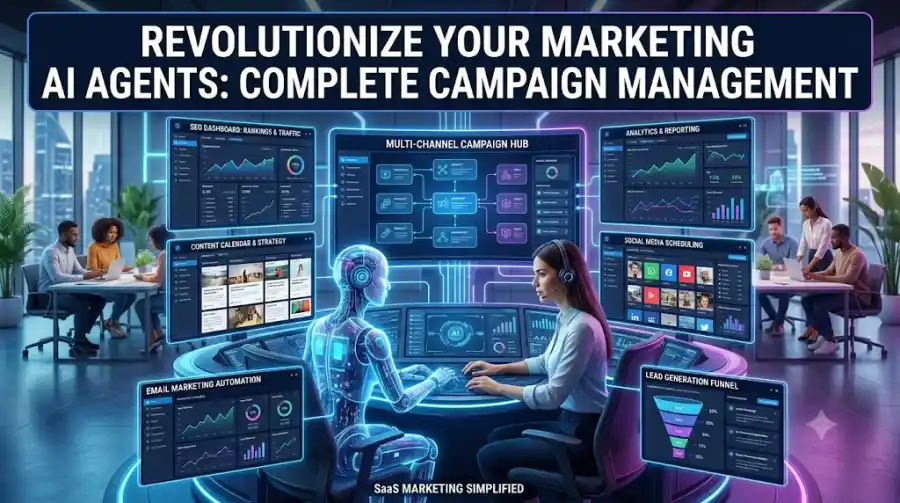
The Most Efficient Marketing Teams in 2026 Aren't Working Longer Hours—They're Working Alongside AI Agents
A few years ago, most marketing teams adopted AI for one simple reason: speed.
AI could help write social media posts.
Generate ad copy.
Suggest blog ideas.
Create email subject lines.
Those capabilities were useful, but they only solved part of the problem.
Marketing teams still spent countless hours coordinating campaigns, moving data between platforms, analyzing reports, researching audiences, updating content calendars, and managing repetitive tasks.
In 2026, the conversation has shifted.
The most innovative marketing teams are no longer asking:
"Can AI create content?"
They're asking:
"Can AI help run marketing operations?"
That question has fueled the rise of AI agents.
Unlike traditional AI tools that wait for instructions, AI agents can execute multi-step workflows, use connected tools, analyze information, and help teams achieve specific marketing goals. Many organizations are now experimenting with AI agents for campaign management, content operations, lead routing, reporting, and optimization workflows.
For marketers facing growing expectations and limited resources, this shift could be transformative.
What Are AI Agents for Marketing?
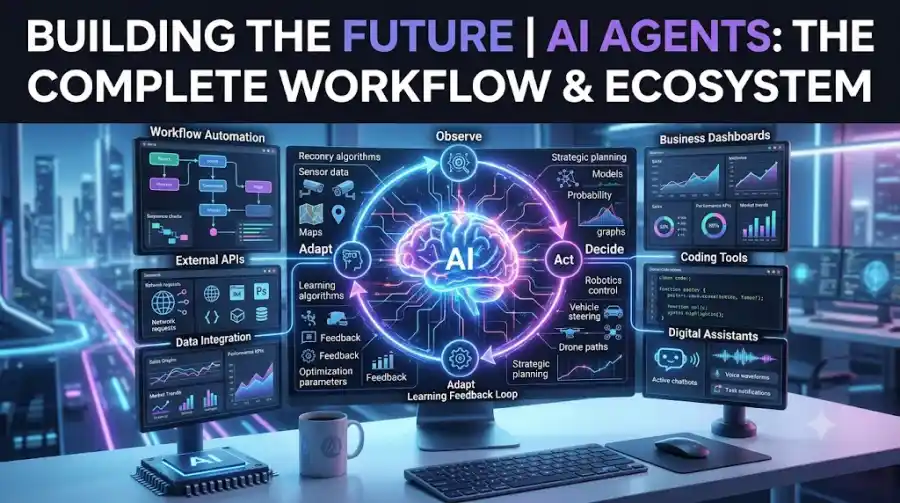
An AI agent is a goal-oriented software system that can plan tasks, use tools, gather information, and execute workflows.
In marketing, AI agents help automate work that traditionally required multiple tools and manual effort.
Examples include:
- Content planning
- Audience research
- Campaign management
- Lead qualification
- Reporting
- Email marketing
- SEO workflows
- Social media operations
Unlike a simple chatbot, an AI agent focuses on achieving an objective rather than merely answering a question. Marketing-focused AI agents can manage multi-step processes and coordinate actions across different tools and platforms.
Why Marketing Teams Need AI Agents
Marketing has become significantly more complex.
Today's teams manage:
- Websites
- Social media
- Search engine optimization
- Email marketing
- Paid advertising
- Analytics
- Customer journeys
- Content production
At the same time, many organizations expect marketers to increase output without dramatically increasing headcount.
This creates a challenge.
How do teams produce more content, launch more campaigns, and analyze more data without burning out?
AI agents provide one possible solution.
They reduce repetitive work and allow marketers to focus on creativity, strategy, and decision-making.
The Difference Between AI Tools and AI Agents
Many marketers use AI tools every day.
Examples include:
- Content generators
- Design assistants
- Writing assistants
These tools help create outputs.
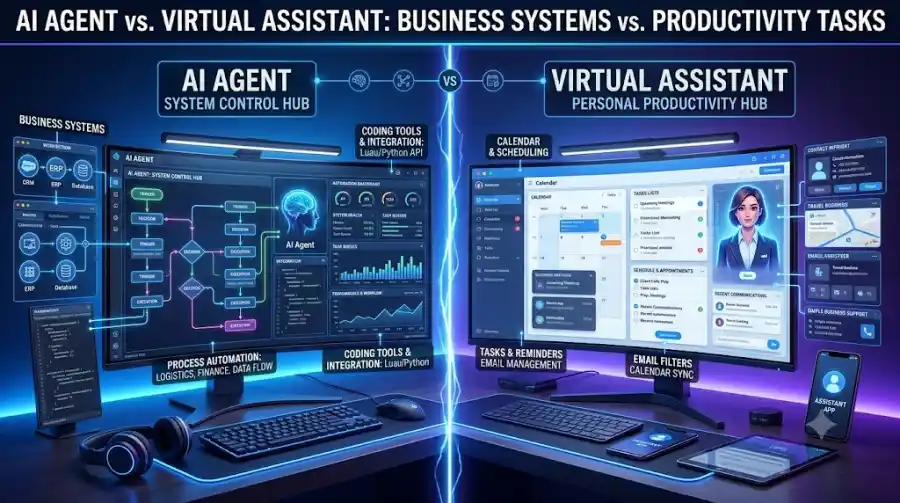
AI agents go a step further.
Instead of generating a single piece of content, an agent may:
- Research a topic
- Analyze competitors
- Create an outline
- Draft content
- Optimize for SEO
- Schedule publication
- Monitor performance
This workflow ownership is what separates AI agents from traditional AI tools. Industry observers increasingly describe AI agents as systems that own workflows while humans oversee outcomes and approvals.
How AI Agents Are Transforming Marketing
Let's look at the areas where AI agents are creating the biggest impact.
1. Audience Research and Market Analysis
Understanding your audience is the foundation of successful marketing.
Traditionally, research involves:
- Surveys
- Competitor analysis
- Social listening
- Keyword research
- Trend monitoring
AI agents can help automate these activities.
They can gather information from multiple sources, identify patterns, and summarize insights.
Instead of spending hours collecting data, marketers can spend more time acting on it.
2. Content Planning
One of the most time-consuming marketing tasks is deciding what to create.
Teams constantly ask:
- What should we publish next?
- Which keywords matter?
- What topics are trending?
- What content is missing?
AI agents can help identify opportunities by analyzing:
- Search trends
- Competitor content
- Website performance
- Audience interests
This helps marketing teams maintain a consistent content pipeline.
3. Content Creation Workflows
Content remains one of the most important marketing channels.
However, producing content at scale is difficult.
AI agents can support:
- Topic research
- Outline creation
- First drafts
- Content optimization
- Repurposing content
Many organizations report using AI agents to accelerate content operations while keeping humans responsible for editing, fact-checking, and brand voice. Content workflows are among the most mature AI-agent use cases currently in production.
4. SEO Operations
Search engine optimization involves many moving parts.
Including:
- Keyword research
- Content audits
- Internal linking
- Technical reviews
- Performance monitoring
AI agents can automate repetitive SEO tasks.
For example:
- Identifying outdated content
- Finding keyword gaps
- Suggesting internal links
- Monitoring ranking changes
This helps teams manage larger content libraries efficiently.
5. Social Media Management
Maintaining an active social presence requires continuous effort.
AI agents can help:
- Generate post variations
- Adapt content for different platforms
- Schedule content
- Monitor engagement
- Track performance
Several AI-agent platforms now focus specifically on social media operations, helping teams move from content creation to scheduling and monitoring within a single workflow.
6. Email Marketing Automation
Email remains one of the highest-ROI marketing channels.
AI agents can assist with:
- Subject line testing
- Audience segmentation
- Email personalization
- Send-time optimization
- Nurture sequences
Instead of managing campaigns manually, marketers can use agents to support execution and optimization.
7. Campaign Management
Campaign coordination often involves multiple channels.
Including:
- Search
- Social
- Display advertising
- Landing pages
AI agents can help keep these activities aligned.
Emerging marketing-agent workflows include campaign orchestration, monitoring, optimization, and performance analysis across multiple channels.
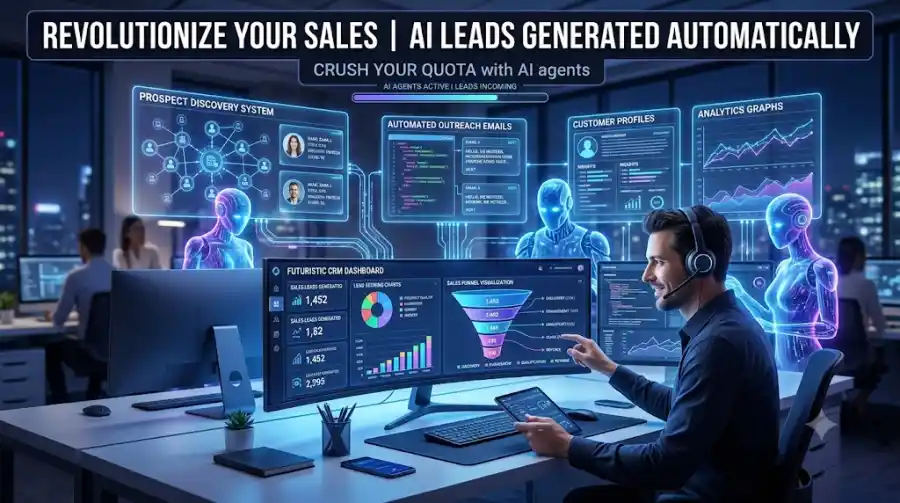
8. Lead Qualification and Routing
Marketing and sales alignment is critical.
AI agents can:
- Enrich lead records
- Score prospects
- Identify buying signals
- Route leads appropriately
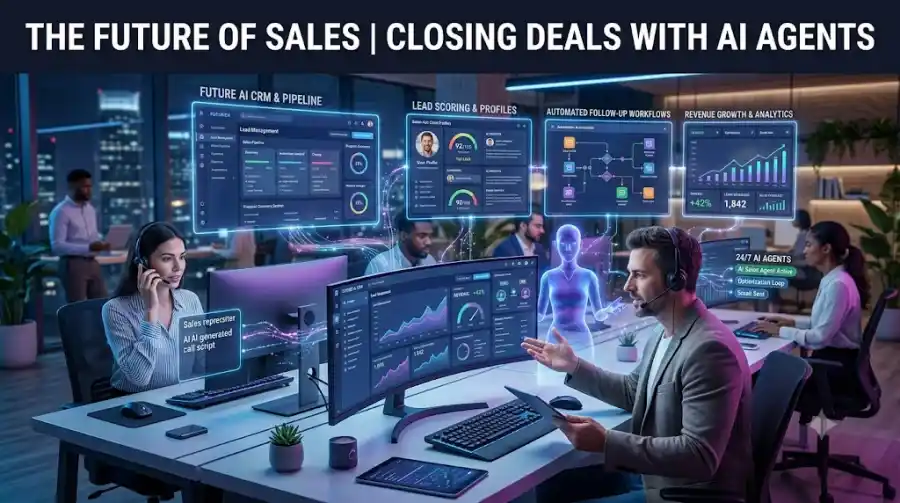
Lead qualification and routing are among the most commonly cited production-ready AI-agent use cases in marketing operations.
9. Marketing Analytics and Reporting
Many marketers spend hours every week building reports.
AI agents can help by:
- Collecting data
- Identifying trends
- Summarizing results
- Highlighting anomalies
This reduces administrative work and improves decision-making.
Real-World Marketing Use Cases
SaaS Companies
Use AI agents to:
- Generate leads
- Create educational content
- Manage nurture campaigns
- Track product engagement
Ecommerce Brands
Use AI agents for:
- Product recommendations
- Customer segmentation
- Promotional campaigns
- Cart recovery
Agencies
Use AI agents to:
- Scale client operations
- Produce reports
- Research competitors
- Create campaign assets
Content Publishers
Use AI agents to:
- Plan content calendars
- Identify keyword opportunities
- Update existing articles
- Analyze traffic trends
Benefits of AI Agents for Marketing Teams
Higher Productivity
Teams spend less time on repetitive tasks.
Faster Campaign Execution
Workflows move more quickly.
Better Data Analysis
Insights become easier to identify.
Improved Personalization
Marketing messages become more relevant.
Greater Scalability
Teams can support growth without dramatically increasing staffing.
Challenges and Limitations
Despite the benefits, AI agents are not magic.
Several challenges remain.
Data Quality
Poor data produces poor results.
Brand Consistency
Human review is still necessary.
Strategic Decisions
AI can assist strategy but should not replace human judgment.
Compliance and Privacy
Marketing teams must respect regulations and customer privacy requirements.
Experts continue to emphasize that AI agents perform best when operating within clear boundaries and with human oversight, particularly for customer-facing activities.
Best Practices for Marketing Teams
Start With One Workflow
Don't automate everything immediately.
Choose one repetitive process.
Create Clear Objectives
Define measurable goals.
Maintain Human Approval
Keep people involved in critical decisions.
Monitor Performance
Track outcomes regularly.
Improve Gradually
Expand successful workflows over time.
Organizations that start with narrow, clearly defined objectives often see better results than those attempting broad automation projects immediately.
The Future of Marketing AI Agents
AI agents are likely to become a standard part of modern marketing operations.
Future developments may include:
- More advanced personalization
- Better predictive analytics
- Improved campaign orchestration
- Enhanced customer journey management
- Smarter cross-channel optimization
However, successful marketing will still require creativity, empathy, and strategic thinking.
AI agents will help marketers work more efficiently.
They will not replace the need for human marketers.
Frequently Asked Questions
- What are AI agents for marketing?
AI agents are software systems that help automate marketing workflows such as content creation, campaign management, audience research, reporting, and lead qualification.
- How are AI agents different from marketing automation?
Traditional automation follows predefined rules. AI agents can analyze context, make decisions within defined limits, and adapt workflows based on changing information.
- Can AI agents create marketing content?
Yes. They can assist with research, outlines, drafts, optimization, and content repurposing, though human editing remains important.
- Are AI agents useful for small businesses?
Yes. Small businesses can use AI agents to automate repetitive marketing tasks, improve productivity, and scale operations more efficiently.
- Will AI agents replace marketers?
Most experts view AI agents as tools that augment marketing teams rather than replace them. Human creativity, strategy, and oversight remain essential.
Marketing teams face increasing pressure to create more content, manage more channels, and deliver better results.
AI agents offer a practical way to handle many of the repetitive tasks that consume time and resources.
From audience research and content planning to campaign management and reporting, these systems are helping marketers focus on higher-value work.
The most successful teams in 2026 are not handing marketing entirely to AI.
They're combining human creativity with intelligent automation.
And that's where AI agents are creating the greatest value.