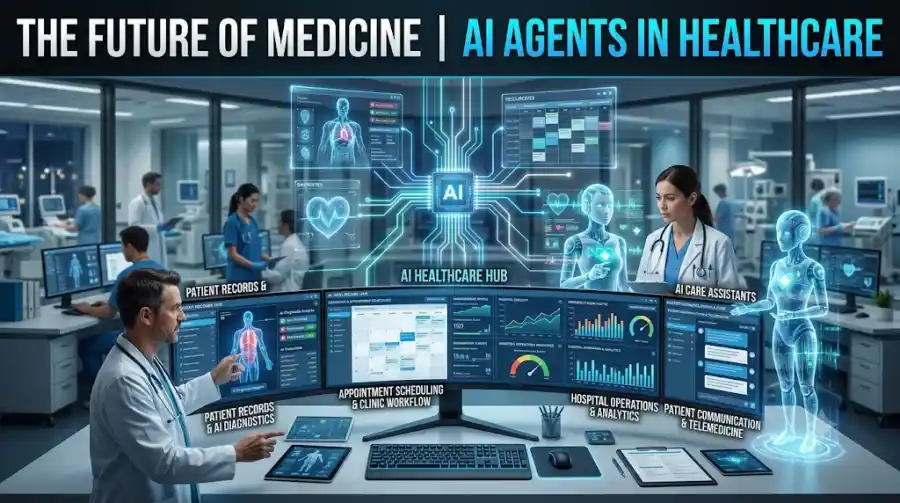
The Most Efficient Healthcare Organizations in 2026 Aren't Working Longer Hours—They're Using AI Agents to Handle Repetitive Tasks
Healthcare has always been about people.
Doctors, nurses, specialists, technicians, administrators, and caregivers work together every day to improve lives.
Yet behind every patient interaction is a massive amount of administrative work.
Appointments need to be scheduled.
Records need to be updated.
Questions need to be answered.
Reports need to be prepared.
Follow-ups need to be tracked.
As healthcare systems become larger and patient expectations continue to rise, managing these tasks manually becomes increasingly difficult.
This is one reason AI agents have become one of the most discussed technologies in healthcare.
Hospitals, clinics, medical practices, and healthcare organizations are exploring how intelligent AI systems can help automate routine work, improve efficiency, and support healthcare professionals.
The goal isn't to replace doctors or nurses.
The goal is to reduce administrative burdens so healthcare teams can focus more on patient care.
In 2026, AI agents are becoming valuable assistants across the healthcare industry, helping organizations streamline operations while improving experiences for both staff and patients.
What Are AI Agents for Healthcare?
AI agents are intelligent software systems designed to perform tasks, manage workflows, and achieve specific goals with minimal human intervention.
In healthcare, AI agents can support:
- Appointment scheduling
- Patient communication
- Administrative workflows
- Medical documentation
- Internal coordination
- Follow-up management
- Workflow automation
- Data organization
Unlike traditional software that simply follows fixed instructions, AI agents can analyze information, make recommendations, prioritize actions, and coordinate tasks across multiple systems.
Think of them as digital healthcare assistants working behind the scenes.
They help healthcare teams save time while improving consistency and efficiency.
Why Healthcare Needs AI Agents
Healthcare organizations face significant challenges.
These include:
- Staff shortages
- Growing patient volumes
- Administrative overload
- Documentation requirements
- Increasing operational costs
- Higher patient expectations
Many healthcare professionals spend a large portion of their day on administrative tasks rather than direct patient care.
This creates pressure on both staff and healthcare systems.
AI agents offer a way to reduce some of this burden.
By automating repetitive work, healthcare teams can focus more attention on patients.
The Administrative Challenge in Healthcare
When people think about healthcare, they often imagine doctors treating patients.
What they don't see is the enormous amount of administrative work required to support care.
Healthcare organizations manage:
- Appointments
- Patient records
- Billing information
- Follow-up communications
- Referrals
- Internal coordination
Every step generates information.
Every interaction creates tasks.
Managing this manually can be time-consuming and inefficient.
AI agents help automate many of these processes.
1. AI-Powered Appointment Scheduling
Scheduling is one of the most common administrative challenges in healthcare.
Patients need:
- Initial appointments
- Follow-up visits
- Specialist consultations
- Diagnostic testing
Healthcare staff often spend hours coordinating schedules.
AI agents can assist by:
- Managing appointment availability
- Confirming bookings
- Sending reminders
- Processing rescheduling requests
This improves efficiency while reducing administrative workloads.
2. Reducing No-Shows
Missed appointments create problems for both patients and healthcare providers.
No-shows can:
- Reduce productivity
- Delay treatment
- Waste resources
- Increase waiting times
AI agents help reduce no-shows by sending:
- Appointment reminders
- Confirmation requests
- Follow-up notifications
Improved communication often leads to better attendance rates.
3. Patient Communication
Patients frequently have questions.
Examples include:
- Appointment details
- Office hours
- Required documents
- Follow-up instructions
Healthcare staff cannot always respond immediately.
AI agents can assist by providing timely information and directing patients to appropriate resources.
This improves responsiveness while reducing workload.
4. Administrative Workflow Automation
Healthcare organizations manage countless administrative tasks.
Examples include:
- Form processing
- Record updates
- Workflow tracking
- Internal notifications
AI agents can automate routine steps and help ensure processes move efficiently.
This reduces manual effort and improves consistency.
AI Agents and Medical Documentation
Documentation is a critical part of healthcare.
Accurate records support:
- Patient care
- Compliance requirements
- Communication between providers
- Operational efficiency
However, documentation can consume significant amounts of time.
AI agents can assist by helping organize information and support documentation workflows.
This allows healthcare professionals to spend more time focusing on patients.
AI Agents for Clinics
Smaller medical practices often have limited administrative resources.
Staff members frequently manage multiple responsibilities simultaneously.
AI agents can help clinics:
- Schedule appointments
- Communicate with patients
- Organize workflows
- Manage administrative tasks
This improves efficiency without requiring large support teams.
AI Agents for Hospitals
Hospitals operate on a much larger scale.
They coordinate:
- Departments
- Specialists
- Patients
- Administrative teams
AI agents can support hospitals by helping manage information and streamline operational processes.
This contributes to improved coordination across complex healthcare environments.
AI Agents for Telemedicine
Telemedicine continues to expand in many regions.
Virtual care creates additional coordination requirements.
AI agents can assist with:
- Scheduling virtual visits
- Sending meeting information
- Managing reminders
- Organizing communications
This helps create a smoother experience for patients and providers.
Benefits of AI Agents in Healthcare
Improved Efficiency
Healthcare teams spend less time on repetitive administrative work.
Better Patient Experiences
Patients receive faster communication and improved support.
Reduced Administrative Burden
Staff can focus on higher-priority responsibilities.
Improved Workflow Consistency
Processes become more standardized and reliable.
Better Resource Utilization
Healthcare organizations can operate more effectively.
Greater Scalability
Growing patient volumes become easier to manage.
AI Agents and Healthcare Operations
Operational efficiency is becoming increasingly important.
Healthcare organizations must balance:
- Quality care
- Financial sustainability
- Staff well-being
- Patient satisfaction
AI agents can support these goals by automating routine tasks and improving coordination.
Small efficiency gains across multiple workflows can create significant benefits.
AI Agents and Healthcare Staff
One common concern is that AI will replace healthcare workers.
In reality, healthcare remains deeply human.
Patients need:
- Compassion
- Judgment
- Expertise
- Personal interaction
AI cannot replace these qualities.
Instead, AI agents help healthcare professionals by reducing repetitive administrative work.
This allows staff to spend more time doing what humans do best.
Caring for people.
Common Misconceptions About AI in Healthcare
AI Will Replace Doctors
This is one of the most common myths.
Doctors provide clinical expertise, judgment, and patient relationships that technology cannot fully replicate.
AI agents are tools that support healthcare professionals.
AI Is Only for Large Hospitals
Many modern AI solutions are available to small clinics and independent practices.
Healthcare organizations of all sizes can benefit.
AI Can Solve Every Problem
AI is powerful, but it is not a magic solution.
Successful implementation requires:
- Planning
- Oversight
- Staff training
- Continuous improvement
Technology works best when combined with strong operational processes.
Challenges Healthcare Organizations Should Consider
AI adoption requires thoughtful planning.
Organizations should consider:
Data Privacy
Patient information must be handled responsibly.
Regulatory Compliance
Healthcare systems must follow applicable regulations.
Workflow Integration
AI tools should fit existing processes.
Human Oversight
Healthcare professionals should remain involved in important decisions.
Responsible implementation is essential.
Best Practices for Implementing AI Agents
Start Small
Begin with one workflow.
For example:
- Appointment reminders
- Scheduling
- Administrative coordination
Measure Results
Track:
- Response times
- No-show rates
- Staff productivity
- Patient satisfaction
Involve Staff
Healthcare workers should participate in implementation decisions.
Focus on Patient Experience
Every automation effort should ultimately support better patient care.
The Future of AI Agents in Healthcare
Healthcare technology continues to evolve rapidly.
Future AI agents may become more capable of:
- Workflow coordination
- Operational planning
- Patient engagement
- Administrative support
- Resource optimization
However, one thing is unlikely to change.
Healthcare will remain people-centered.
Technology can support care.
Technology can improve efficiency.
Technology can reduce administrative burdens.
But compassionate healthcare still depends on human professionals.
The future is not healthcare workers versus AI.
It is healthcare workers empowered by AI.
Frequently Asked Questions
- What are AI agents in healthcare?
AI agents are intelligent software systems that help automate administrative tasks, patient communication, scheduling, documentation workflows, and operational processes.
- Can AI replace doctors and nurses?
No. AI supports healthcare professionals by handling repetitive tasks while human expertise remains essential.
- How do AI agents improve healthcare operations?
They help automate workflows, improve communication, reduce administrative burdens, and increase efficiency.
- Are AI agents useful for small clinics?
Yes. Small clinics often benefit because they have limited administrative resources and can use AI to improve efficiency.
- What is the biggest advantage of AI agents in healthcare?
The biggest advantage is reducing repetitive administrative work so healthcare teams can focus more on patient care.
Healthcare organizations face growing pressure.
Patient expectations continue to rise.
Administrative workloads continue to expand.
Resources remain limited.
AI agents are helping healthcare providers navigate these challenges by automating routine processes and improving operational efficiency.
From appointment scheduling and patient communication to workflow automation and documentation support, AI is becoming an important part of modern healthcare operations.
The organizations seeing the greatest benefits are not replacing healthcare professionals with technology.
They are using technology to support healthcare professionals.
By reducing administrative burdens, AI agents allow doctors, nurses, and healthcare teams to spend more time focusing on what truly matters.
Delivering exceptional patient care.
And that is where the real value of AI in healthcare begins.