Many People Think AI Agents and Virtual Assistants Are the Same Thing—They're Not
If you've spent even a few minutes reading about artificial intelligence in 2026, you've probably seen two terms appear again and again:
AI Agents
and
Virtual Assistants
The problem is that many people use them interchangeably.
Some software companies call everything an AI agent.
Others label advanced automation systems as virtual assistants.
As a result, business owners, creators, developers, and everyday users often struggle to understand what these technologies actually do.
The reality is that AI agents and virtual assistants are related, but they are not the same thing.
Understanding the difference matters because choosing the wrong solution can lead to wasted money, unrealistic expectations, and poor results.
In this guide, we'll break down exactly how AI agents differ from virtual assistants, where each one shines, and how to decide which approach makes the most sense for your needs in 2026.
What Is an AI Agent?
An AI agent is a software system designed to pursue goals and complete tasks with a degree of autonomy.
Unlike traditional AI tools that simply respond to prompts, AI agents can:
- Plan tasks
- Use tools
- Access systems
- Execute actions
- Evaluate outcomes
- Continue working toward objectives
Modern AI agents often combine reasoning, planning, memory, and tool usage to complete multi-step workflows with limited human supervision.
Think of an AI agent as a digital worker.
You provide a goal.
The agent determines how to achieve it.
Examples of AI Agents
Common examples include:
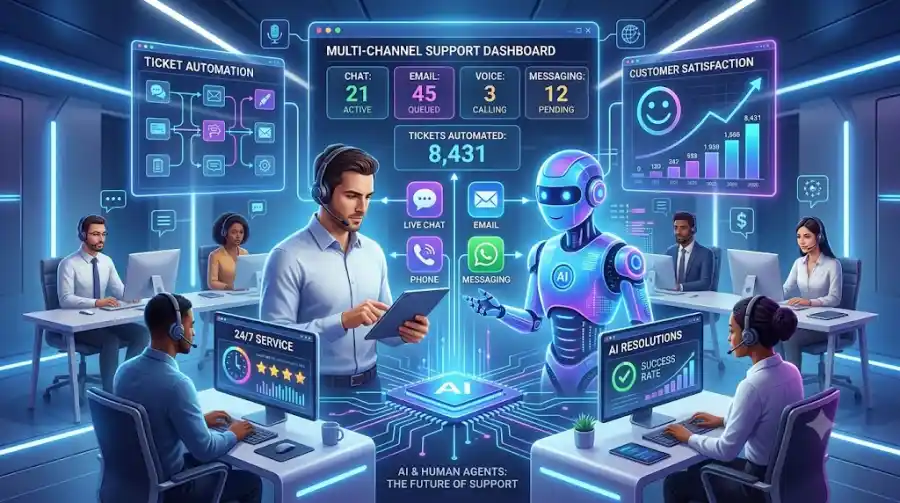
Customer Support Agents
Handle support tickets and process requests.
Coding Agents
Write code, run tests, and fix bugs.
Research Agents
Collect information and create reports.
Ecommerce Agents
Monitor inventory and automate workflows.
Marketing Agents
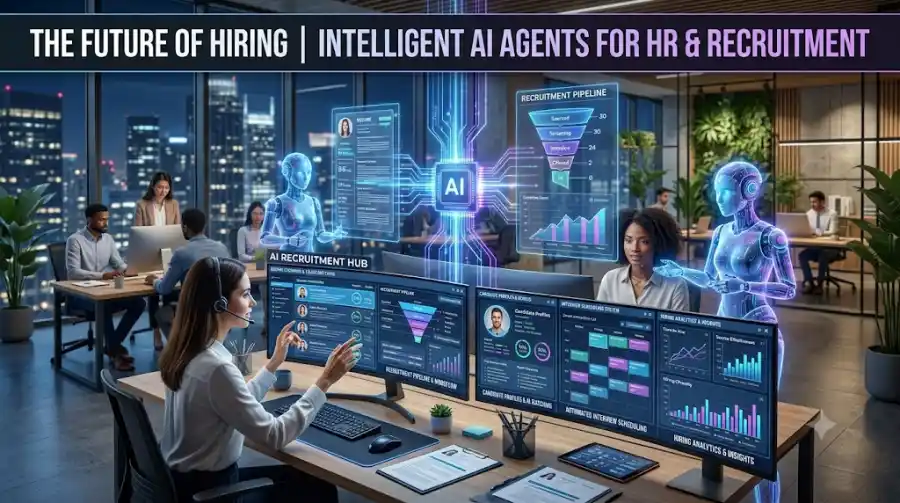
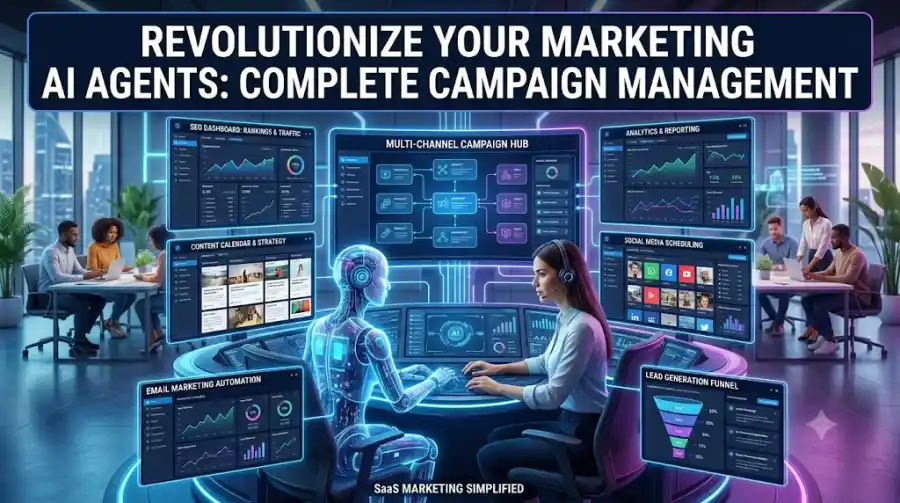
Manage campaigns and analyze performance.
The key characteristic is autonomy.
The agent is working toward an outcome rather than simply responding to individual requests.
What Is a Virtual Assistant?
A virtual assistant is typically a system designed to help users complete tasks through direct interaction.
It waits for instructions.
It responds to commands.
It assists rather than independently executes complex workflows.
Examples include:
- Siri
- Alexa
- Google Assistant
- Basic AI chat assistants
- Productivity assistants
The defining characteristic is that the human remains in control of every step. The assistant responds to requests and generally waits for the next instruction before continuing.
Examples of Virtual Assistant Tasks
Virtual assistants commonly help with:
- Setting reminders
- Answering questions
- Summarizing information
- Drafting emails
- Scheduling appointments
- Creating notes
- Managing calendars
These tasks are usually completed one request at a time.
The assistant does not typically create a long-term plan or pursue a goal independently.
The Core Difference: Assistance vs Action
If you only remember one thing from this article, remember this:
Virtual Assistants Assist
AI Agents Act
An assistant helps you perform work.
An agent helps complete work.
Many industry explanations summarize the difference this way: assistants are generally prompt-driven and reactive, while agents are goal-driven and capable of taking actions across multiple steps.
That single distinction explains almost every other difference.
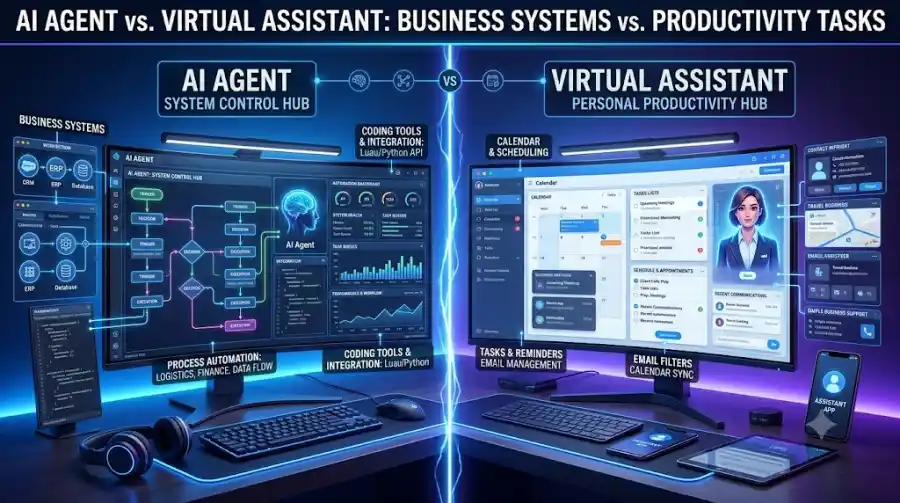
AI Agents vs Virtual Assistants: Side-by-Side Comparison
| Feature | AI Agent | Virtual Assistant |
|---|---|---|
| Autonomy | High | Low |
| Multi-Step Planning | Yes | Limited |
| Goal-Oriented | Yes | Usually No |
| Tool Usage | Extensive | Basic to Moderate |
| Decision Making | Yes | Minimal |
| Workflow Execution | Yes | Limited |
| Human Supervision | Reduced | Continuous |
| Best For | Complex tasks | Daily assistance |
AI agents generally plan and execute tasks across multiple steps, while assistants focus on responding to user instructions and helping with individual actions.
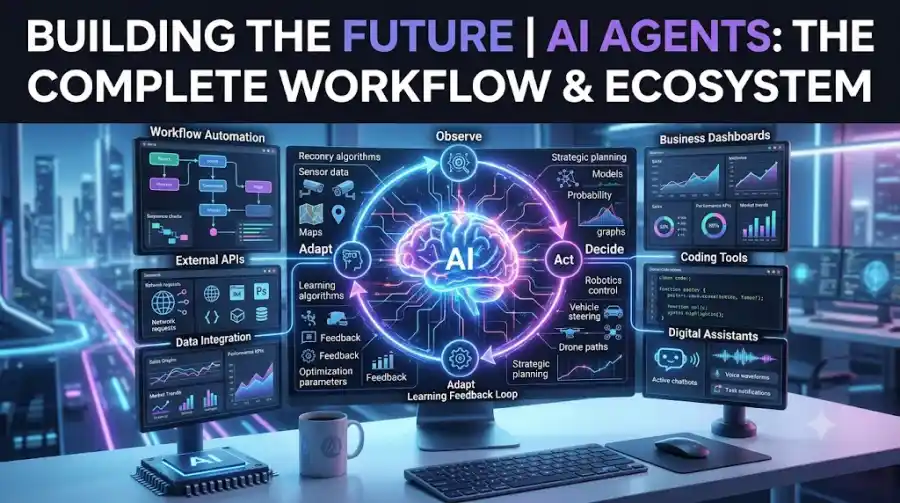
How AI Agents Work
A typical AI agent workflow looks like this:
Step 1
Receive a goal.
Step 2
Break the goal into smaller tasks.
Step 3
Choose tools.
Step 4
Perform actions.
Step 5
Evaluate results.
Step 6
Adjust strategy if necessary.
Step 7
Deliver completed work.
This process is often described as a planning-and-execution loop where the system observes outcomes and continues working toward a goal.
How Virtual Assistants Work
Virtual assistants typically follow a simpler workflow.
Step 1
Receive a request.
Step 2
Process the request.
Step 3
Generate a response.
Step 4
Wait for the next instruction.
The interaction remains largely human-driven. The assistant helps complete tasks but does not usually continue independently toward a larger objective.
Where AI Agents Excel
AI agents perform best when tasks involve:
Multiple Steps
Complex processes with several stages.
Tool Usage
Interacting with APIs, databases, and software systems.
Repetitive Workflows
Automating business operations.
Goal Completion
Working toward defined outcomes.
Business Automation
Reducing manual effort.
Examples include:
- Lead generation
- Customer support automation
- Research projects
- Coding workflows
- Data analysis
Where Virtual Assistants Excel
Virtual assistants are often better for:
Quick Questions
Fast information retrieval.
Daily Productivity
Managing tasks and reminders.
Personal Organization
Scheduling and note-taking.
Conversational Help
Brainstorming and ideation.
Low-Risk Tasks
Activities requiring frequent human involvement.
For many users, virtual assistants remain the easiest way to interact with AI on a daily basis.
AI Agents for Businesses
Businesses are increasingly interested in AI agents because they can automate larger workflows.
Examples include:
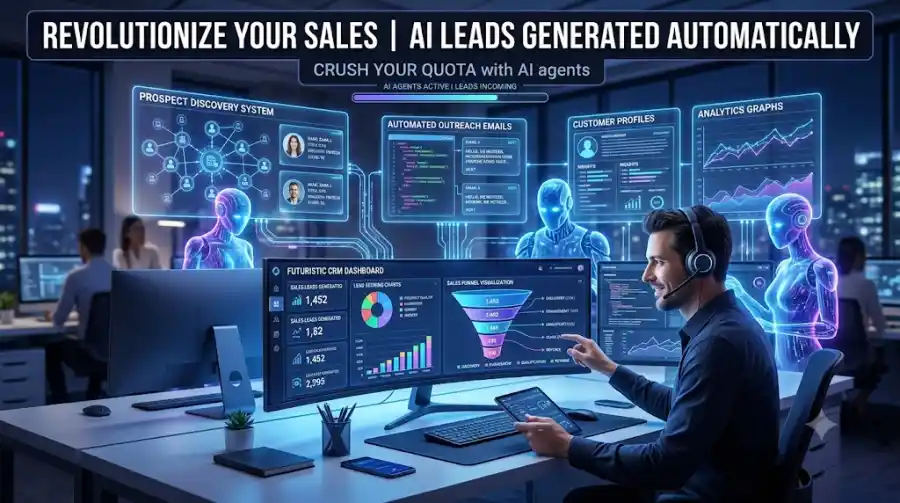
Sales
Finding leads and qualifying prospects.
Customer Support
Resolving tickets.
Marketing
Managing campaigns.
Ecommerce
Monitoring inventory and processing requests.
Operations
Handling repetitive administrative work.
Many organizations view AI agents as digital team members capable of executing defined business processes.
Virtual Assistants for Businesses
Virtual assistants also provide value.
Common use cases include:
- Meeting scheduling
- Email drafting
- Internal knowledge assistance
- Employee support
- Information retrieval
Rather than replacing workflows, they improve productivity within existing workflows.
Can an AI Assistant Become an AI Agent?
Interestingly, the line between these technologies is becoming less clear.
Many modern AI assistants now include:
- Tool access
- Memory
- Automation features
- Workflow capabilities
As assistants gain more autonomy, they begin to behave more like agents.
Industry experts increasingly describe AI as existing on a spectrum rather than in strictly separate categories. Some products function as assistants in one mode and agents in another.
Do AI Agents Replace Human Virtual Assistants?
This is one of the most common questions businesses ask.
The answer depends on the work.
AI agents are excellent at:
- Structured tasks
- Repetitive workflows
- High-volume operations
Human virtual assistants remain stronger at:
- Relationship management
- Emotional intelligence
- Judgment calls
- Ambiguous situations
- Strategic thinking
Many businesses are adopting hybrid approaches where AI handles repetitive work while humans focus on higher-value activities.
The Rise of Personal AI Agents
One of the biggest AI trends in 2026 is the emergence of personal AI agents.
Unlike traditional assistants that wait for commands, these systems aim to:
- Manage calendars
- Book travel
- Handle purchases
- Coordinate tasks
- Monitor information
Several technology companies are investing heavily in this area, describing a shift from simple assistants toward persistent, goal-oriented digital helpers.
At the same time, privacy and oversight remain important concerns as these systems gain access to more personal information.
Which One Should You Choose?
The answer depends on your goals.
Choose a Virtual Assistant If:
- You want help with everyday tasks.
- You prefer direct control.
- You need information quickly.
- You are focused on personal productivity.
Choose an AI Agent If:
- You want automation.
- You need multi-step workflows.
- You manage repetitive processes.
- You want software that can take actions.
For many businesses, the most effective strategy is using both.
Assistants improve productivity.
Agents improve automation.
Together, they create more powerful workflows.
Frequently Asked Questions
- What is the biggest difference between AI agents and virtual assistants?
The biggest difference is autonomy. Virtual assistants respond to instructions, while AI agents work toward goals using planning, tools, and multi-step execution.
- Are AI agents smarter than virtual assistants?
Not necessarily. They often use similar underlying AI models. The difference is how they operate and how much autonomy they have.
- Can AI agents work without supervision?
Many AI agents can perform tasks with limited supervision, but human oversight remains important, especially for high-impact decisions.
- Will AI agents replace virtual assistants?
AI agents will likely automate many repetitive tasks, but human judgment and oversight remain valuable in many situations. Hybrid approaches are becoming increasingly common.
- Are AI agents useful for small businesses?
Yes. Small businesses use AI agents for customer support, marketing, lead generation, scheduling, and operational automation.
AI agents and virtual assistants may seem similar at first glance, but they are built for different purposes.
Virtual assistants help people perform tasks.
AI agents help complete tasks.
As AI technology continues to evolve, the gap between these categories will likely become smaller. Assistants are becoming more capable, while agents are becoming more accessible.
For businesses, creators, and professionals, understanding this difference is essential because the right tool can save time, improve productivity, and automate work more effectively.
The future isn't about choosing between AI agents and virtual assistants.
It's about understanding when each one delivers the most value.