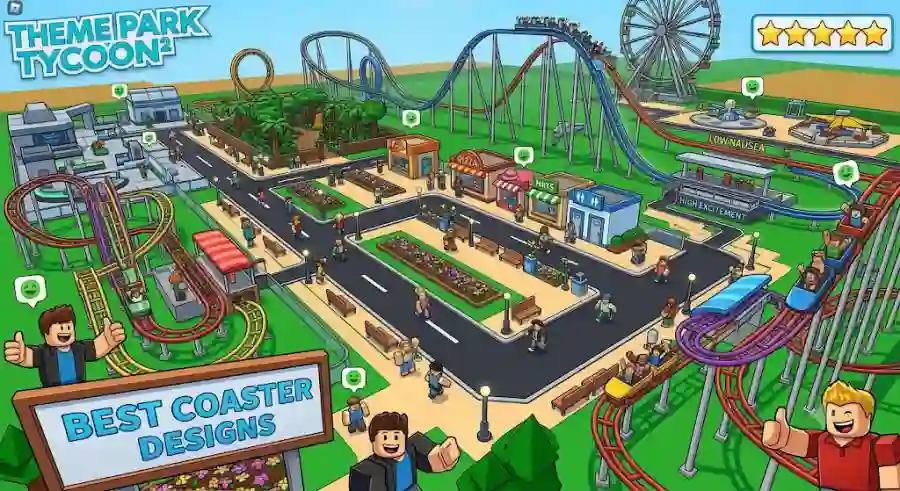
Master Roblox Theme Park Tycoon 2 With Smart Park Layouts, Perfect Coaster Stats and High-Profit Ride Strategies
A successful theme park depends on several hidden factors working together — guest movement, coaster statistics, scenery placement, queue management, and the overall park layout. A coaster can be visually impressive but still fail if guests become exhausted walking to it, experience too much nausea, or get stuck in poorly designed pathways.
Highlights: What Makes a Perfect Theme Park Tycoon 2 Layout?
Before building your dream roller coaster, it is important to understand the foundation of a successful park.
The biggest mistakes many players make include:
- Creating confusing pathways
- Building attractions too close together
- Ignoring guest needs after rides
- Making coasters too intense
- Forgetting scenery and environment design
A great coaster alone cannot carry your entire park. Your guests judge everything — from the moment they enter the gate until they leave.
The strongest Theme Park Tycoon 2 parks focus on:
- Smooth guest movement
- Balanced coaster statistics
- Strategic attraction placement
- Comfortable waiting areas
- Food and rest zones
- High scenery ratings
The goal is not simply to build the fastest ride. The goal is to create an experience guests enjoy from beginning to end.
Master Park Flow First: The Foundation of a 5-Star Theme Park
Understanding How Guests Move Around Your Park
Before placing your first coaster track, you need to think like a theme park designer.
In Theme Park Tycoon 2, guests follow simple movement patterns. They travel through paths, search for attractions, become hungry or tired, and decide whether your park feels enjoyable.
If your park layout creates unnecessary walking distances or confusing routes, even the best roller coaster will struggle to maintain high ratings.
A smart layout makes visitors move naturally from one attraction to another without wasting energy.
1. Avoid Dead-End Paths: Build Continuous Movement Routes
One of the most common mistakes in Theme Park Tycoon 2 is creating long, straight paths that lead to only one attraction.
Imagine a guest walking hundreds of tiles toward your biggest coaster. They finally ride it, but now they have to walk the same long distance back. During that journey, their hunger, energy, and happiness levels can drop.
The result?
A lower-quality park experience.
The Better Solution: Create Loop-Based Path Designs
Instead of building dead ends, connect your pathways into large loops.
Popular options include:
- Circular park paths
- Giant ring layouts
- Figure-eight walking routes
- Connected attraction zones
Loop layouts allow guests to naturally move between different rides, shops, and entertainment areas without constantly backtracking.
This improves:
- Guest satisfaction
- Park efficiency
- Attraction visibility
- Overall visitor flow
A good path system makes your park feel larger while actually reducing unnecessary walking.
2. Use Strategic Zoning for Better Guest Management
Professional theme parks divide attractions into different zones based on ride intensity. You should do the same in Theme Park Tycoon 2.
Mixing extreme roller coasters with beginner rides in random locations can create crowd problems and reduce the overall balance of your park.
A better approach is creating dedicated areas.
Entry Zone: Relaxed and Beginner-Friendly Attractions
The entrance area should welcome guests with comfortable experiences.
Recommended attractions:
- Gentle rides
- Family-friendly attractions
- Food courts
- Small flat rides
This zone helps new visitors settle into your park before they move toward bigger attractions.
Mid-Park Zone: Family and Medium Intensity Rides
The middle section of your park should contain attractions that appeal to a wider audience.
Good choices include:
- Medium-sized coasters
- Family rides
- Interactive attractions
- Restaurants and shopping areas
This keeps different types of guests entertained.
Back or Thrill Zone: Extreme Attractions
Your biggest rides should usually be placed deeper inside the park.
Examples:
- Massive roller coasters
- Giant drop towers
- High-intensity thrill rides
Separating these attractions prevents entrance areas from becoming overcrowded and creates a natural exploration path for visitors.
The Science Behind Guest Satisfaction: Understanding Coaster Statistics
Creating a successful coaster in Theme Park Tycoon 2 requires understanding the three most important ride statistics:
- Excitement
- Intensity
- Nausea
Many beginner builders focus only on making rides bigger and faster. However, the best-performing coasters balance these three values carefully.
A ride with maximum intensity may look impressive, but if guests become sick or refuse to ride, it will hurt your park.
The Perfect Coaster Stat Balance
For maximum guest satisfaction, your target numbers should look like this:
| Stat Metric | Ideal Target | Effect on Guests |
|---|---|---|
| Excitement | 60+ (High) | Increases ride popularity |
| Intensity | 40–60 (Moderate to High) | Keeps thrill seekers satisfied |
| Nausea | Below 30 (Low) | Prevents negative guest reactions |
Excitement: Make Guests Want to Ride
Excitement is one of the most important statistics because it directly influences attraction popularity.
A high excitement score usually comes from:
- Airtime moments
- Interesting layouts
- Smooth drops
- Scenery interaction
- Creative track designs
A coaster that feels memorable will attract more visitors.
Intensity: Find the Perfect Thrill Level
Intensity is where many players make mistakes.
A coaster should feel exciting, but not overwhelming.
If intensity becomes extremely high:
- Some guests avoid the ride
- Families may ignore the attraction
- Nausea levels often increase
The best designs create thrilling moments while maintaining control.
Nausea: The Hidden Rating Killer
Nausea is often the reason a great-looking coaster performs poorly.
When nausea becomes too high:
- Guests may refuse to ride
- Visitors may leave unhappy
- Your park rating can suffer
Keeping nausea below 30 is generally the safest target for a highly successful coaster.
Quick Tricks to Reduce Nausea in Your Coasters
Bank Your Turns Properly
Fast corners should never be completely flat.
A sharp 90-degree turn at high speed creates uncomfortable sideways forces, increasing nausea.
Always use banked turns where the track tilts into the corner.
This creates smoother movement and improves ride quality.
Smooth Out Track Transitions
Avoid sudden changes between extreme elements.
For example:
A maximum-speed vertical drop directly into a tight loop can create unnecessary stress on the ride.
Instead, add:
- Two or three tiles of straight track
- Gentle curves
- Smoother transitions
This helps absorb speed and keeps coaster statistics balanced.
Add Brake Runs Before the Station
A coaster should slow down naturally before returning to the station.
If a train crashes into the station at extremely high speed, nausea can increase dramatically.
Adding brake sections near the ending section creates a smoother finish and improves guest experience.
3 Best Coaster Designs for Maximum Guest Satisfaction
After understanding park flow and coaster statistics, the next step is designing rides that consistently perform well.
A great coaster does not need to be the tallest or fastest attraction in your park. The best designs create a balance between excitement, smooth movement, scenery interaction, and guest comfort.
Here are three reliable coaster layouts that work extremely well in Theme Park Tycoon 2 and can help improve your park ratings.
Design 1: The Out-and-Back Airtime Monster (Hypercoaster)
The Out-and-Back coaster design is one of the most successful roller coaster layouts in real-world amusement parks, and it works surprisingly well in Theme Park Tycoon 2.
The concept is simple:
The coaster travels outward toward the edge of your park, completes a large turnaround, and returns back toward the station.
Although the design looks simple, it creates a powerful guest experience because it focuses on one of the most valuable coaster elements — airtime.
Best Track Type
Recommended coaster types:
- Steel Coaster
- Hyper Coaster
These coaster types are ideal because they allow long layouts with smooth hills, large drops, and exciting speed sections.
Out-and-Back Layout Structure
A strong Out-and-Back coaster usually includes:
1. A Steep Chain Lift Hill
The ride should begin with a large climb that creates anticipation.
A tall lift hill increases excitement because guests experience a dramatic view of the entire park before the first drop.
2. A Powerful First Drop
The first drop should be steep and dramatic.
A near-vertical descent creates a major excitement boost while giving riders a memorable opening moment.
3. Multiple Camelback Hills
Add three to four camelback hills throughout the layout.
These are smooth hills designed to create airtime — the feeling that riders are lifted from their seats.
Airtime is extremely valuable because it increases excitement without creating excessive nausea.
4. Wide Banked Turnaround
At the far end of the track, create a large 180-degree banked curve.
Avoid tight corners.
A wide turnaround keeps the ride smooth while maintaining speed.
5. Smooth Return Section
The return journey should include smaller airtime hills before reaching a controlled brake section.
This creates a satisfying ending instead of a sudden stop.
Why Guests Love the Out-and-Back Design
This coaster works because it delivers continuous excitement without unnecessary rough movements.
Benefits include:
- High excitement ratings
- Low nausea levels
- Strong guest appeal
- Efficient use of space
The combination of airtime and smooth transitions makes it one of the safest choices for building a high-rated attraction.
Design 2: The Smooth Inverted Launch Coaster
Inverted coasters create a completely different experience because the train hangs below the track.
This design makes riders feel more exposed, which naturally increases excitement.
Adding a launch system instead of a traditional lift hill also improves ride efficiency by reducing waiting times.
Best Track Type
Recommended coaster types:
- Inverted Coaster
- Linear Induction Motor (LIM) Coaster
These options are perfect for players who want a thrilling ride with strong guest flow.
Inverted Launch Coaster Layout Structure
1. Immediate Launch Station
Start the ride with a powerful launch directly from the station.
This removes the slow beginning of a traditional lift hill and gets guests into the action immediately.
2. Vertical Loop or Immelmann Turn
After the launch, add a large inversion element.
Good choices include:
- Vertical loops
- Immelmann turns
- Smooth twisting elements
These increase excitement while keeping the ride visually impressive.
3. Floating Zero-G Roll
A zero-g roll creates a weightless feeling and adds variety to the coaster experience.
This element improves excitement without needing extreme speed.
4. Scenic Helix Section
Wrap sections of the track around:
- Water features
- Custom terrain
- Buildings
- Themed areas
This improves scenery interaction and makes the ride more memorable.
Why Guests Love This Design
The inverted launch coaster combines speed, smooth movement, and strong visual appeal.
Advantages include:
- High thrill factor
- Shorter waiting times
- Strong excitement ratings
- Better guest movement through queues
It is an excellent choice for players who want a modern-looking attraction that feels professional.
Design 3: Compact Terrain Multi-Launch Coaster (Space Saver)
Not every player has unlimited land or money.
For smaller parks, the compact terrain multi-launch coaster provides a powerful solution.
Instead of spreading across a huge area, this design creates excitement by weaving through a smaller space.
Best Track Type
Recommended coaster:
- Steel Launch Coaster
This type works well because it provides speed while allowing creative layouts.
Compact Multi-Launch Layout Structure
1. Medium-Sized First Launch
Begin with a controlled launch into a banked over-banked turn.
This creates excitement immediately without making the ride too intense.
2. Figure-Eight Track Design
Create a layout that crosses over and under itself.
This gives the coaster a much larger appearance while using less land.
It also creates exciting visual moments for guests watching from nearby paths.
3. Secondary Booster Launch
Add another launch section in the middle of the ride.
The second boost maintains momentum and keeps the experience exciting.
Follow it with a smooth corkscrew or twisting element.
4. Gentle Final Deceleration
Finish with a smooth curve into the station area.
A controlled ending improves the overall ride experience.
Why Guests Love Compact Coasters
This design works because it combines:
- Efficient land usage
- Strong scenery interaction
- High excitement ratings
- Lower construction costs
The game's attraction system rewards coasters that interact with their environment, meaning smart design can sometimes outperform bigger rides.
Micro-Details That Can Push Your Park From 4 Stars to 5 Stars
A perfect coaster layout is only part of the formula.
Many players build excellent rides but forget the small details surrounding the attraction.
These details often separate average parks from premium five-star parks.
1. Maximize Scenery Rating Around Your Coaster
Theme Park Tycoon 2 rewards players who create immersive environments.
A coaster sitting alone in an empty field will usually perform worse than the same coaster surrounded by detailed scenery.
Improve scenery by adding:
- Trees
- Rocks
- Custom buildings
- Lighting effects
- Themed decorations
Use Head-Chopper Effects
One popular advanced building technique is creating head-chopper moments.
This involves placing objects close to the track so guests feel like the coaster is narrowly passing through obstacles.
Examples:
- Support beams near the track
- Tunnel sections
- Decorative structures
These elements can increase excitement because they make the ride feel faster and more dramatic.
2. Optimize Your Queue Line Design
A poorly designed queue can damage the guest experience before the ride even begins.
A guest waiting for months of in-game time will become unhappy.
Ideal Queue Length
Keep queues around:
- 10 to 15 path tiles
A queue that is too short may make the ride look unpopular.
A queue that is too long creates frustration.
Improve Waiting Areas
Add decorations around your queues:
- Lanterns
- Benches nearby
- Queue decorations
- Themed scenery
These details make waiting feel more enjoyable.
3. Create Exit Loops: The Hidden Profit Strategy
One of the smartest Theme Park Tycoon 2 strategies is building a small service area near coaster exits.
After completing a thrilling ride, guests usually have:
- Higher happiness
- Lower energy
- Lower hunger
- Lower drink levels
This creates the perfect opportunity to increase profits.
Build a Mini Plaza Near Major Coasters
Place these facilities near ride exits:
Food Stall
Examples:
- Hot Dogs
- Pizza
Drink Stall
Helps restore guest thirst levels.
Restroom
Essential after long attractions.
Trash Can and Bench Area
Keeps guests comfortable and your park cleaner.
This simple strategy keeps guests inside your park longer and encourages additional spending.