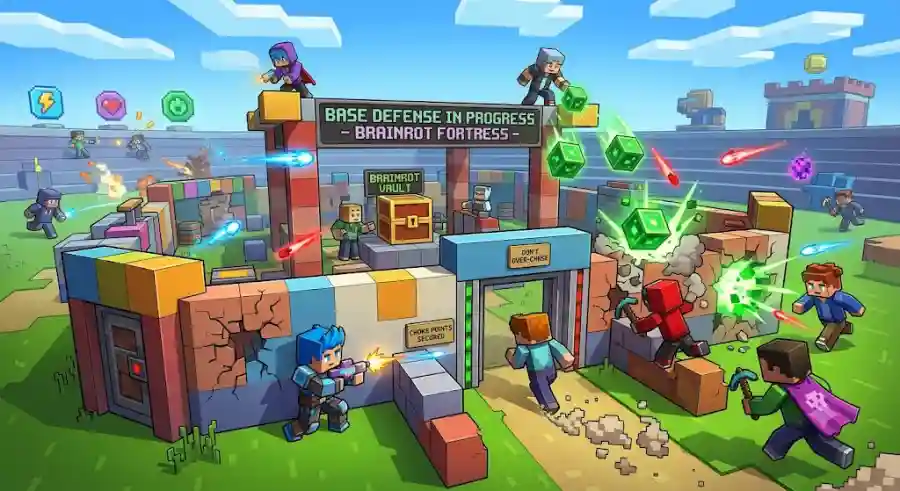
How to Build an Unbreakable Fortress in Steal a Brainrot and Stop Enemy Raids Before They Start
The good news is that successful defense isn't just about having quick reflexes. Smart layouts, proper positioning, teamwork, awareness, and adaptability can transform an ordinary base into a fortress that frustrates even the most aggressive attackers.
Highlights
Key Defensive Strategies at a Glance
- Build maze-like layouts instead of open pathways.
- Create fake routes and decoy rooms to confuse attackers.
- Turn entrances into powerful choke points.
- Use audio cues and minimap awareness to detect threats early.
- Assign defensive roles when playing with teammates.
- Avoid chasing enemies too far from your base.
- Constantly adapt to changing enemy tactics and meta strategies.
- Protect your vault through layered defensive systems.
- Use positioning and cover to maximize combat efficiency.
- Force attackers to make mistakes rather than taking unnecessary risks.
Why Defense Matters More Than Most Players Realize
Many newcomers approach Steal a Brainrot with an aggressive mindset. They want to steal resources, eliminate opponents, and rack up impressive scores as quickly as possible.
However, veteran players know that defense often determines who wins and who loses.
Think about it this way: every successful raid against your base doesn't just strengthen your opponent—it weakens you. Resources disappear, momentum is lost, and valuable time must be spent rebuilding rather than progressing.
A well-defended base acts as a safety net. It allows you to attack confidently because you know your valuables are protected. More importantly, strong defenses force opponents to waste time and resources trying to break through.
In competitive Roblox environments, time is often the most valuable resource of all.
Master the Art of the Distraction Layout
Why Base Architecture Matters
Before discussing combat skills, weapon usage, or defensive roles, it's important to address one of the most overlooked aspects of Steal a Brainrot: base design.
An open base with a clear path to the vault creates an easy opportunity for attackers. If enemy players can run straight from the entrance to your valuables without resistance, your defense has already failed.
The goal is simple: make every step difficult.
The Maze Method
One of the most effective defensive strategies involves creating maze-like pathways throughout your base.
Instead of constructing a simple perimeter around your territory, force enemies to navigate a series of twists, turns, and obstacles before they can reach anything valuable.
Effective Maze Design Tips
- Use sharp corners whenever possible.
- Create narrow hallways that limit movement.
- Add multiple turns between entrances and vault areas.
- Break up direct sightlines.
- Force enemies to repeatedly change direction.
The longer attackers spend navigating your base, the more opportunities you have to identify, track, and eliminate them.
Every second an enemy spends searching for your vault is another second you gain to prepare a response.
Symmetrical Deception
Psychology can be just as powerful as physical barriers.
If Steal a Brainrot's building mechanics allow it, consider constructing symmetrical hallways, fake pathways, or dummy rooms.
When attackers rush into a base, they often make split-second decisions based on instinct and adrenaline. If they choose the wrong path and encounter a dead end, they immediately become vulnerable.
Benefits of Fake Routes
- Confuses enemy players.
- Slows down experienced raiders.
- Creates opportunities for ambushes.
- Increases enemy frustration.
- Encourages mistakes under pressure.
A confused attacker is often an easy attacker to defeat.
Secure and Control Your Choke Points
What Are Choke Points?
Throughout military history, successful defenses have relied on choke points.
A choke point is any narrow location where enemies are forced to move through a restricted area.
In Steal a Brainrot, choke points are among the most powerful defensive tools available.
Rather than fighting attackers in wide-open spaces where they can maneuver freely, force them into confined locations where you control the engagement.
Focus Your Defensive Power
One common mistake players make is spreading defenses evenly across an entire base.
While this may seem logical, it often weakens your overall effectiveness.
Instead, identify your primary entrance and concentrate defensive resources there.
Strong Choke Point Practices
- Position defensive tools near key entrances.
- Place obstacles around blind corners.
- Slow enemy movement whenever possible.
- Create bottlenecks that force players into predictable routes.
- Maintain visibility over critical pathways.
When attackers lose momentum inside a narrow corridor, they become significantly easier to eliminate.
Pro Positioning Strategy
Even the strongest choke point can fail if you're standing in the wrong location.
Avoid positioning yourself directly in the center of defensive corridors.
Instead:
- Stay slightly off-angle.
- Use nearby cover.
- Watch entry points from concealed positions.
- Prepare surprise attacks as enemies cross the threshold.
This creates stronger ambush opportunities while reducing your exposure during firefights.
Situational Awareness Wins Games
Your Eyes Are Not Enough
Steal a Brainrot moves incredibly fast.
Because so much action happens simultaneously, many players become overly focused on what appears directly in front of them. This tunnel vision often allows stealthier opponents to slip into the base unnoticed.
Elite defenders maintain awareness of the entire battlefield rather than just their immediate surroundings.
Audio Is Basically a Free Warning System
Many players underestimate how valuable sound can be.
The game's audio provides constant information about nearby threats.
Listen carefully for:
- Footsteps
- Breaking barriers
- Ability activations
- Combat sounds
- Movement indicators
These sounds often reveal enemy positions before they appear on screen.
If you hear someone approaching from a specific direction, you can prepare your aim, position yourself correctly, and gain a major advantage before the fight even begins.
In many situations, good listening skills can be as valuable as mechanical combat skill.
Minimap and UI Awareness
Successful defenders constantly monitor their interface.
Pay attention to:
- Barrier health indicators
- Team status updates
- Respawn notifications
- Activity near critical areas
If a teammate suddenly respawns or a defensive structure begins taking damage, react immediately.
The faster you respond, the less likely attackers are to reach important objectives.
Build Layers of Defense
Why One Defender Is Never Enough
When playing with teammates, relying on a single defender is a risky strategy.
Even highly skilled players can become overwhelmed by coordinated attacks.
A layered defense ensures that your base remains protected even if one defensive position collapses.
Think of your defense as multiple security checkpoints rather than a single wall.
The Scout
Primary Responsibilities
- Detect incoming enemy pushes.
- Identify enemy numbers.
- Communicate attack routes.
- Apply early damage.
Ideal Position
- Front entrances
- Elevated positions
- High-visibility areas
The Scout acts as the team's early warning system.
Their goal isn't necessarily to secure eliminations but to provide information.
The Anchor
Primary Responsibilities
- Hold the main defensive line.
- Stop enemy rushes.
- Control choke points.
- Prevent breakthrough attempts.
Ideal Position
- Behind primary cover.
- Near major entry corridors.
- Around critical defensive structures.
The Anchor serves as the backbone of the defense and absorbs the majority of enemy pressure.
The Vault Guard
Primary Responsibilities
- Protect valuable resources.
- Eliminate enemies who slip through defenses.
- Serve as the final security layer.
Ideal Position
- Directly inside the vault room.
- Near high-value objectives.
- Close to resource storage locations.
The Vault Guard ensures that even successful infiltrators face one final obstacle before reaching their goal.
Avoid the Over-Chase Trap
The Most Common Defensive Mistake
Among all defensive errors in Steal a Brainrot, one stands above the rest.
Players get greedy.
Here's how it usually happens:
You spot an intruder.
You deal significant damage.
The enemy panics and runs.
You decide to chase.
Before you realize it, you've followed them halfway across the map.
Meanwhile, your base sits completely unguarded.
Why Chasing Is Dangerous
In many situations, fleeing enemies are intentionally trying to lure defenders away.
The attacker may be:
- Acting as bait.
- Creating distractions.
- Leading you into an ambush.
- Buying time for teammates.
- Opening a path to your vault.
A single elimination is rarely worth sacrificing your entire defense.
The Better Alternative
Instead of chasing endlessly:
- Secure your territory.
- Force attackers outside your perimeter.
- Heal if necessary.
- Return to defensive positions.
- Prepare for the next push.
Remember, you have the home-field advantage.
Make enemies come to you.
Adapt to the Attacker's Meta
Predictability Is a Weakness
One of the biggest mistakes experienced players make is becoming predictable.
A defensive setup that works early in a match may become ineffective later as opponents adjust their strategies.
Strong defenders constantly evolve.
Study Enemy Behavior
Pay attention to recurring patterns.
Ask yourself:
- Which routes are enemies using?
- Where are attacks coming from?
- Which abilities cause the most trouble?
- What defensive areas are being exploited?
The answers reveal where improvements are needed.
Counter Repeat Attackers
If a specific player repeatedly succeeds using the same route or tactic, make immediate adjustments.
Possible changes include:
- Relocating traps.
- Modifying pathways.
- Changing defensive positions.
- Switching equipment.
- Reworking choke points.
Never allow opponents to become comfortable attacking your base.
The moment attackers believe they understand your setup, change it.
Uncertainty forces mistakes.
Mistakes create opportunities.
And opportunities create victories.
Industry Analysis: Why Defensive Gameplay Is Becoming More Important in Roblox
The growing popularity of competitive Roblox experiences has changed how players approach games like Steal a Brainrot.
Modern Roblox players are more strategic than ever before. Many study guides, watch content creators, learn optimized routes, and experiment with advanced tactics.
As a result, defensive gameplay has become increasingly important.
Games that feature base management, resource protection, and PvP combat reward players who can balance aggression with security.
Steal a Brainrot perfectly reflects this trend.
Players who focus solely on attacking often experience inconsistent success, while those who combine offense and defense typically achieve stronger long-term results.
The game's design rewards preparation, awareness, teamwork, and adaptation—all key pillars of successful defensive play.
Why These Strategies Matter
These defensive techniques are effective because they address every major aspect of base protection:
- Architecture slows attackers.
- Choke points control movement.
- Awareness prevents surprise attacks.
- Team roles improve coordination.
- Layered defenses reduce risk.
- Anti-chase discipline protects resources.
- Adaptability counters evolving strategies.
When combined, these systems create a defense that is significantly harder to penetrate than simple walls or reactive gameplay alone.
The goal is not merely surviving attacks.
The goal is making your base such a difficult target that opponents decide attacking someone else is easier.
That's when your defense is truly working.